The Long Term Impact of Periodontal Health on Tooth Stability and Overall Oral Function
Explore how periodontal health influences long term tooth stability, gum strength, and overall oral function, and why early intervention protects your smile for decades.
Periodontal Health on Tooth Stability and Overall Oral Function
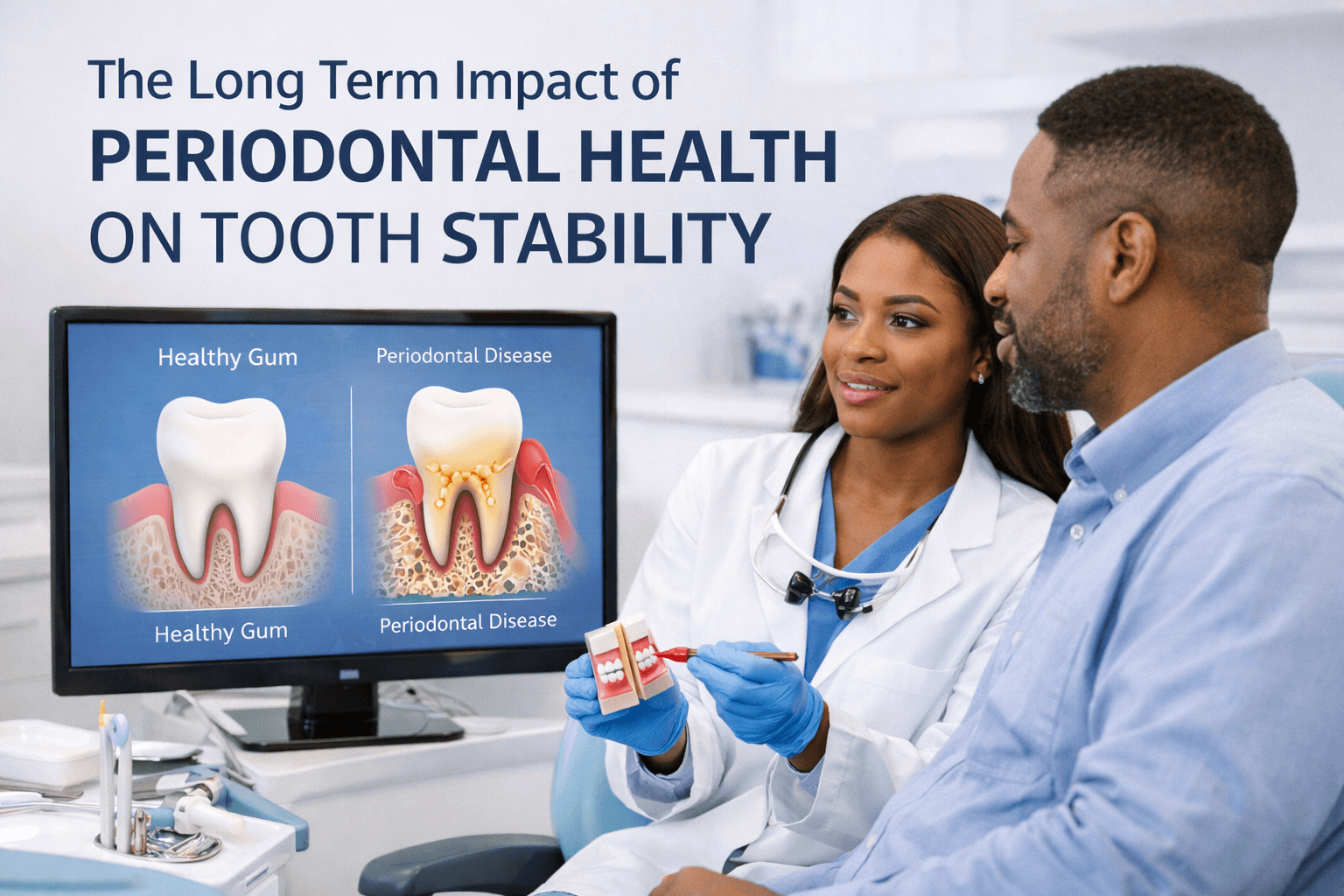
Periodontal health is one of the most decisive yet underestimated determinants of long term oral stability. While patients often focus on visible tooth appearance, the supporting structures beneath the surface play a far more critical role in determining whether a smile remains intact over decades. The gums, connective tissues, and underlying bone form the biological foundation that anchors the teeth. When these structures remain healthy, teeth function efficiently, withstand daily chewing forces, and maintain their natural alignment. When they deteriorate, even structurally strong teeth become vulnerable.
Periodontal disease typically begins as mild inflammation of the gum tissue. In its earliest stage, symptoms may include slight redness or bleeding during brushing, signs that many individuals dismiss as minor irritation. However, inflammation within the periodontal tissues can gradually extend deeper, affecting the connective attachment and eventually the supporting bone. This progression often occurs without significant pain, which explains why many patients only seek care when mobility, discomfort, or visible recession becomes evident.
In clinical practice, we frequently observe that patients who prioritize preventive care rarely progress to advanced periodontal complications. Through structured evaluation under Family Dentistry, gum condition is monitored routinely, allowing early changes to be addressed before attachment loss occurs. This continuity of care transforms periodontal management from reactive treatment to long term preservation.
The biological mechanisms underlying periodontal disease involve bacterial accumulation along the gum margin, which triggers inflammatory responses within the tissue. When plaque biofilm remains undisturbed, it hardens into calculus and creates an environment conducive to further bacterial growth. The immune response to this accumulation, rather than the bacteria alone, contributes significantly to tissue breakdown. As inflammation persists, collagen fibers weaken and bone support gradually diminishes. Without professional intervention, this cycle can continue for years.
This is where specialized Periodontics becomes essential. Targeted periodontal assessment allows precise measurement of gum pocket depths, tissue attachment levels, and bone support. Early therapeutic strategies may include professional scaling, root surface debridement, and patient-specific oral hygiene planning. In more advanced cases, regenerative approaches or surgical correction may be required to restore structural support and stabilize the dentition. By addressing the condition at its biological source, long term tooth retention becomes achievable.
Modern advancements have further refined periodontal treatment approaches. The integration of Laser Dentistry enables controlled removal of infected tissue while minimizing trauma to surrounding structures. Laser-assisted procedures reduce bleeding, accelerate healing, and improve patient comfort compared to traditional methods. These technological improvements have significantly enhanced both patient experience and clinical outcomes in periodontal therapy.
The long term implications of untreated periodontal disease extend beyond localized gum damage. Progressive bone loss alters tooth alignment, affects bite stability, and can compromise chewing efficiency. In some cases, the structural imbalance created by missing or mobile teeth accelerates wear on remaining teeth, creating secondary complications. Additionally, chronic oral inflammation contributes to systemic inflammatory burden, reinforcing the importance of maintaining periodontal health as part of overall wellbeing.
One of the most effective strategies for preserving periodontal stability is consistent monitoring. Regular examinations allow for early detection of gingival changes, professional removal of bacterial deposits, and reinforcement of daily hygiene practices. Patients who maintain scheduled visits often experience significantly slower progression of gum-related issues, preserving natural teeth well into later decades of life.
Lifestyle factors also influence periodontal health. Smoking, uncontrolled systemic conditions, stress, and dietary habits can increase susceptibility to inflammation and impair healing capacity. Comprehensive dental care therefore includes not only clinical treatment but also patient education aimed at modifying risk factors and strengthening long term outcomes.
For individuals in Lagos and Abuja seeking to protect their teeth against long term instability, structured periodontal evaluation is a crucial starting point. Early intervention preserves both comfort and function, ensuring that cosmetic or restorative procedures are supported by a healthy biological foundation. Appointments can be scheduled through Contact / Book Appointment, where a comprehensive periodontal assessment can establish a preventive and therapeutic plan tailored to individual needs.
Blog